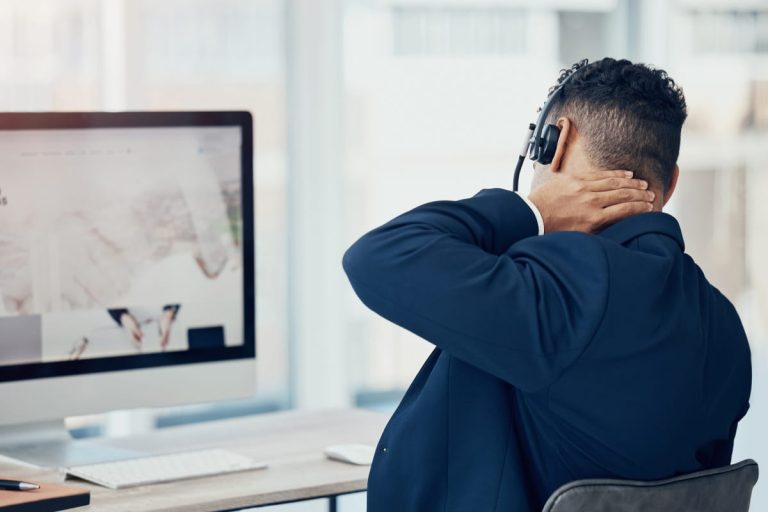

A contemporary desk chair does more than hold you upright at your workspace. It supports your posture, fits into your office aesthetic, and keeps you comfortable whether you’re tackling spreadsheets or settling into a video call. Modern workspaces have moved past the bulky, dated seating of the past. Today, your chair needs to work as hard as you do while looking the part.
We’ve seen how office design has evolved. Clean lines, neutral tones, and functional furniture now define professional spaces. The perfect desk chair doesn’t just blend in; it elevates the entire room. Whether you’re setting up a home office in Perth or outfitting a corporate workspace, choosing a chair that balances style with ergonomic support makes a real difference to how you work and feel at the end of the day
What defines a contemporary desk chair?
Contemporary office chairs stand apart from traditional designs through their minimalist silhouettes and integrated ergonomics. Where older chairs relied on heavy padding and bulky frames, modern seating uses sleek aluminium bases, breathable mesh, and sculpted forms that support your body without overwhelming your space.
The term “contemporary” speaks to design language. Think clean lines, neutral palettes (black, dark grey, charcoal), and materials that serve both function and form. Ergonomic office chairs typically feature adjustable lumbar support, synchro-tilt mechanisms, and seat-height controls. These aren’t afterthoughts; they’re built into the chair’s DNA.
What makes these chairs different from their predecessors? They prioritise movement. Sitting for hours on end strains your back and shoulders. Contemporary ergonomic design encourages micro-adjustments throughout the day. Your chair should flex with you, not against you. That’s where features like tilt tension and seat slide come into play.
Ergonomic features that actually matter
Not all office chairs deliver on their ergonomic promises. When you’re evaluating seating, focus on adjustability. A fixed chair forces your body to adapt; an adjustable one moulds you.
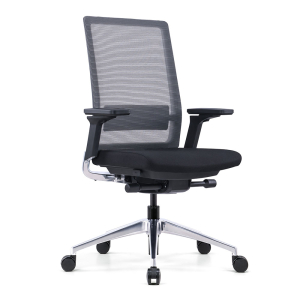
- Seat height is non-negotiable. Your feet should rest flat on the floor, with your knees at about 90 degrees. The Jarvis Mesh Office Chair offers a height range of 440-540 mm, comfortably accommodating most body types.
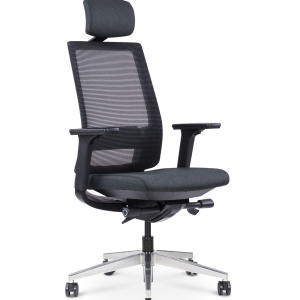
- Lumbar support keeps your lower back aligned. Some chairs, like the Vix Mesh Office Chair, use flex-mesh that provides dynamic support. The mesh adapts as you shift position, maintaining contact with your lumbar curve without feeling rigid.
- Tilt mechanisms vary by chair. Synchro-tilt (found on the Vix and Zephyr High Back Executive Chair) reclines the backrest and seat at different ratios, keeping your feet on the ground as you lean back. Synchro tilt, featured on the Dahlia Low Back Executive Chair, pivots from the front of the seat. Both styles work; your preference depends on how you naturally recline.
- Adjustable arms matter more than people think. Fixed arms can interfere with desk height or keyboard placement. Adjustable arms let you position the support exactly where your elbows need it. Some users remove arms entirely for better desk clearance.
- Castors may seem minor, but they significantly affect mobility. PU castors are gentler on hard floors than hard nylon castors and are less likely to cause damage. Standard nylon castors suit carpet. If you’re pairing your chair with one of our adjustable desks, smooth-rolling wheels make it effortless to transition between sitting and standing heights.
Materials that balance comfort and durability
Contemporary desk chairs use materials chosen for longevity and comfort, not just aesthetics.
- Mesh backs have become popular for good reason. Mesh office chairs are breathable, which keeps you cool during long hours at your desk. Mesh also moulds to your spine’s natural curve, providing support without pressure points.
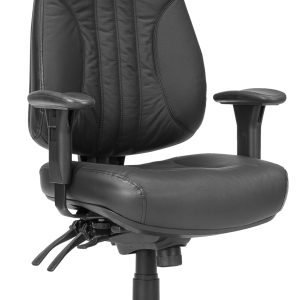
- Leather office chairs bring a different feel. Leather, like that used on the Dahlia and Zephyr models, develops character over time. It’s easy to clean, durable, and suitable for formal environments (such as boardrooms and executive offices). Some people find leather warmer in summer; others appreciate the premium look it brings to a workspace.
- Fabric seats offer a middle ground. They’re softer than mesh, less formal than leather, and come in colours beyond black. Charcoal and light grey fabric seats pair well with neutral office palettes. Fabric also tends to cost less, making it a practical choice for home offices or hot-desking setups.
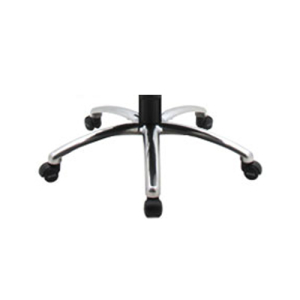
- Frames matter too. Aluminium bases provide strength without bulk. They’re lightweight, making them easier to move, and they resist corrosion. Polished aluminium finishes add a modern touch that complements glass desks or minimalist workstations.
Popular styles for modern workspaces
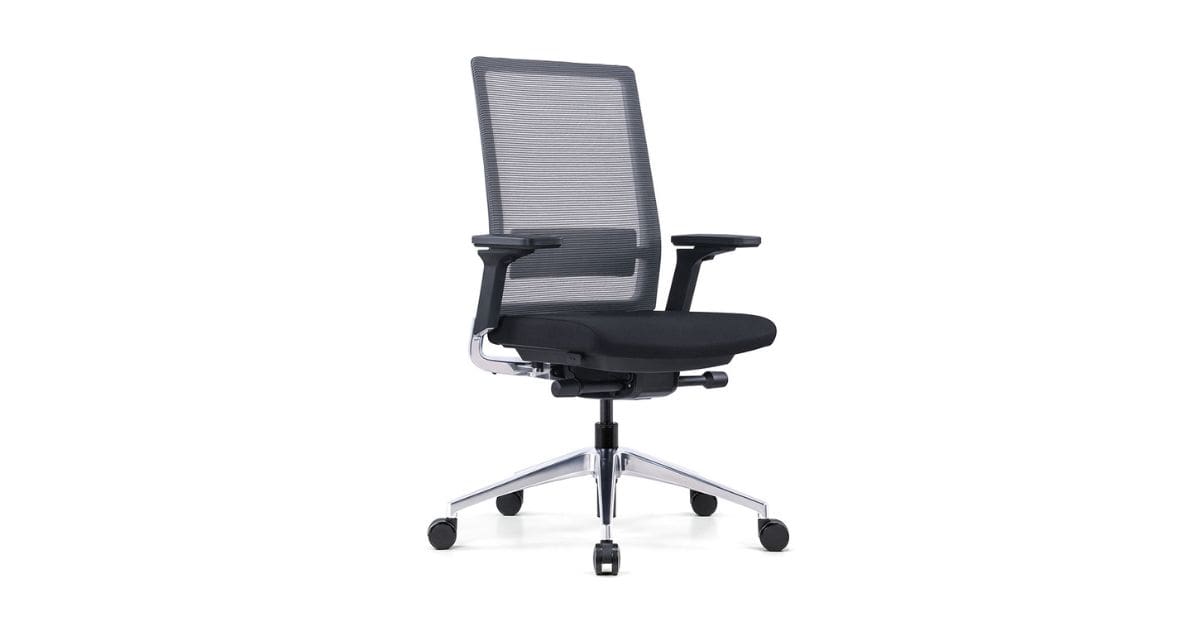
Jarvis Mesh Office Chair.
Ergonomic mesh office chairs dominate task seating
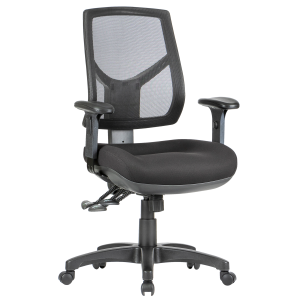
They’re lightweight, breathable, and adjust to fit a range of body types. The Jarvis and Vix models exemplify this category. Both feature synchro-tilt, optional arms, and seat-slide mechanisms. The Vix includes GREENGUARD Gold certification, which means it meets strict low-VOC standards (ideal for enclosed offices or sensitive users).
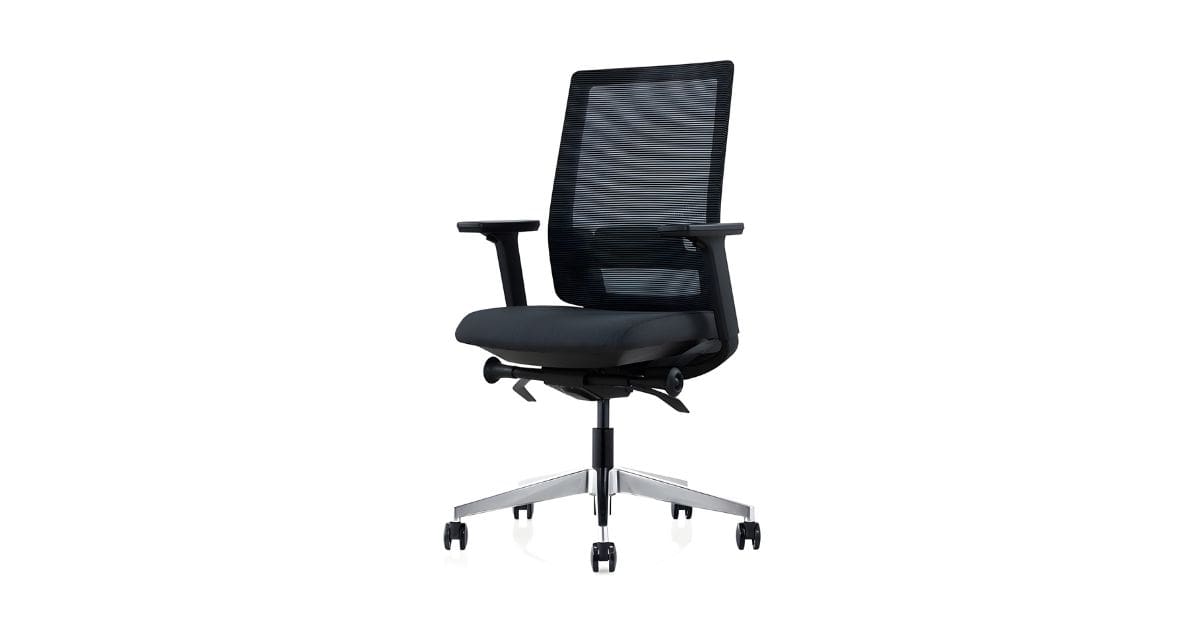
Vix Mesh Office Chair.
Leather executive chairs suit leadership roles and formal meeting spaces
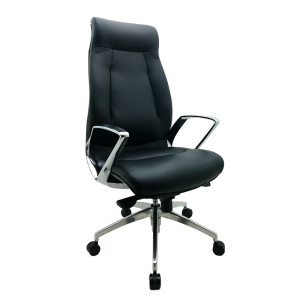
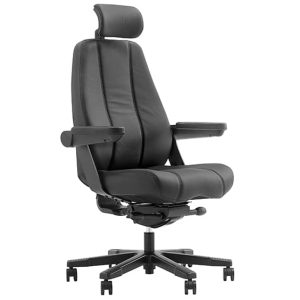
High backs, plush cushioning, and polished bases signal professionalism. The Zephyr, with its premium black leather and fixed arms, fits this mould perfectly. These chairs make a statement without being ostentatious.
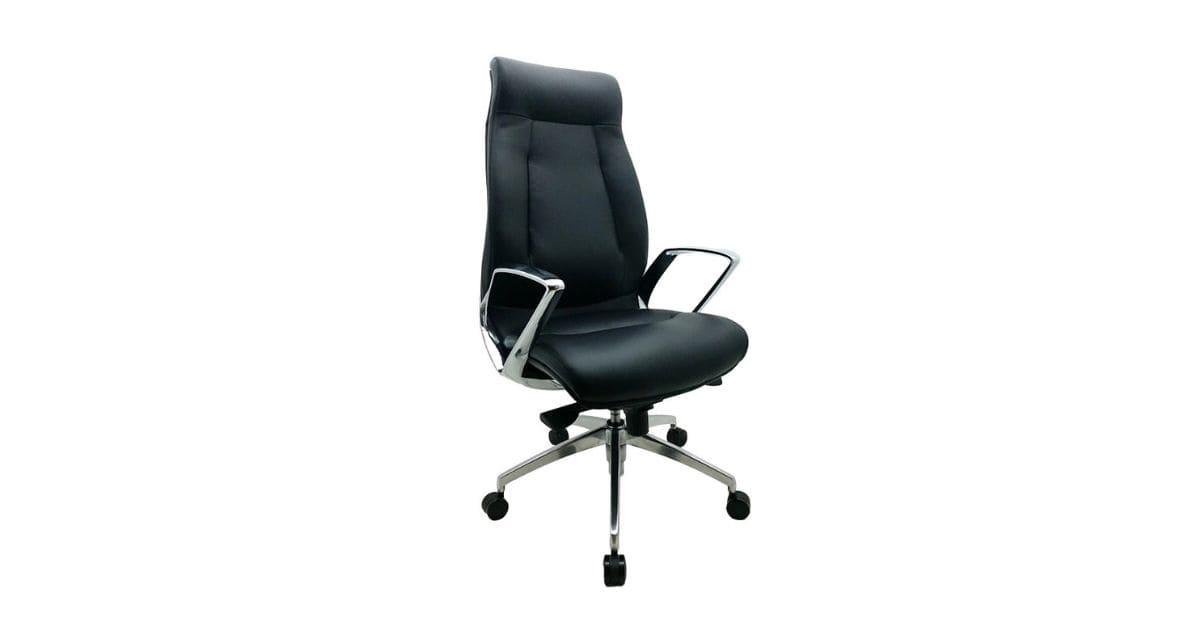
Zephyr High Back Executive Chair.
Minimalist fabric chairs work well in home offices or creative studios
They’re less imposing than leather, more forgiving than mesh, and blend into residential spaces. If your office doubles as a guest room or living area, a fabric task chair won’t visually dominate the space.
Compact chairs serve smaller workstations
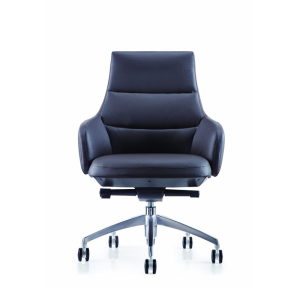
Low-back designs like the Dahlia save space while still offering Synchro tilt and lumbar contouring. These chairs are well-suited to standing-desk setups, where you perch briefly between standing sessions.
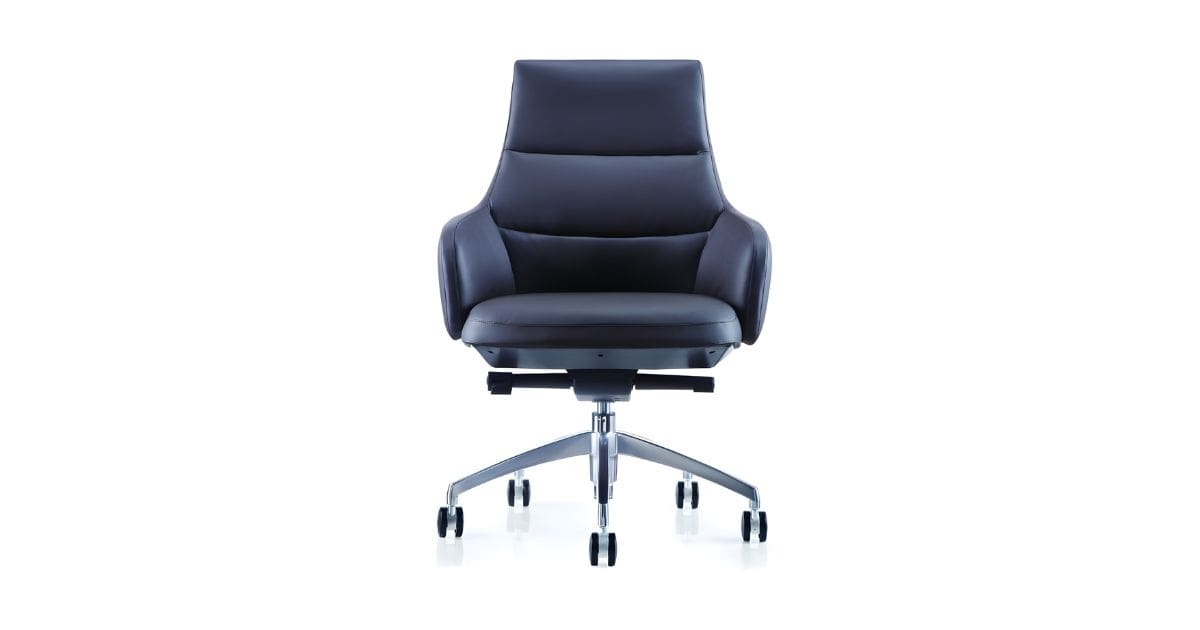
Dahlia Low Back Executive Chair.
Best contemporary desk chairs from ARTEIL
We’ve curated four models that represent different styles and price points. Each chair balances ergonomic design with contemporary aesthetics.
| Model | Style & Use | Key Features | Materials | Price (inc GST) |
| Dahlia Low Back Executive Chair | Sleek leather executive | Gas-lift height, synchro-tilt with multi-lock, adjustable tension | Premium black leather, polished aluminium base | From $775.50 |
| Jarvis Mesh Office Chair | Everyday task chair | 4-position synchro-tilt, sliding seat, optional arms | Black mesh back, fabric seat, black/white frame | From $407.00 |
| Vix Mesh Office Chair | Agile hot-desk & sit-stand | Synchro-tilt, seat-slide, 100 mm gas lift, GREENGUARD Gold | Mesh back (white/black frame), charcoal or blue fabric seat | From $396.00 |
| Zephyr High Back Executive Chair | Statement leadership chair | Synchro-tilt, fixed leather arms, gas-lift height | Premium black leather, polished aluminium base | From $715.00 |
The Jarvis sits in the middle of our range. It’s versatile enough for corporate offices and home workspaces. The 440-540 mm seat-height range fits most users, and the optional arms let you customise your setup.
The Vix offers the best value for hot-desking environments or businesses outfitting multiple workstations. Its lightweight frame and easy assembly make it practical for spaces where furniture moves frequently. The GREENGUARD certification also matters if you’re furnishing a healthcare office or an educational facility that meets strict indoor air quality standards.
For executive seating, the Zephyr delivers. High backs provide head and neck support during long meetings. The fixed leather arms maintain a clean profile, and the polished aluminium base adds visual weight without bulk.
The Dahlia suits users who want executive styling without a towering backrest. Its low-back design works well with standing desks, allowing you to perch briefly without committing to a full sit. The knee-tilt mechanism feels intuitive; you lean back, and the chair responds.
Design trends shaping office chairs
- Neutral tones dominate contemporary office furniture. Black, dark grey, and charcoal remain popular because they pair with almost any workspace palette. Light grey accents (like the Vix’s frame options) soften the look without sacrificing professionalism.
- Sustainability influences buying decisions more each year. Locally manufactured chairs reduce carbon miles. Certifications such as GREENGUARD indicate low-VOC materials, which are essential for enclosed spaces or for users with sensitivities.
- Smart seating technology hasn’t reached mainstream adoption yet, but adjustability is getting more intuitive. Synchro-tilt mechanisms, once found only on premium chairs, now appear on mid-range models like the Jarvis. Seat-slide controls that extend or shorten the seat pan accommodate different thigh lengths without requiring a different chair size.
- Compact designs suit smaller home offices. Apartment dwellers and remote workers need furniture that doesn’t overwhelm limited square footage. Low-profile chairs with slim bases fit under desks neatly when not in use.
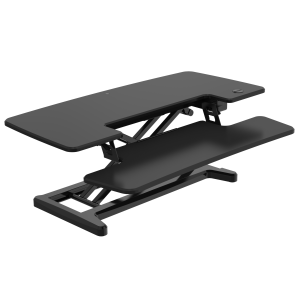
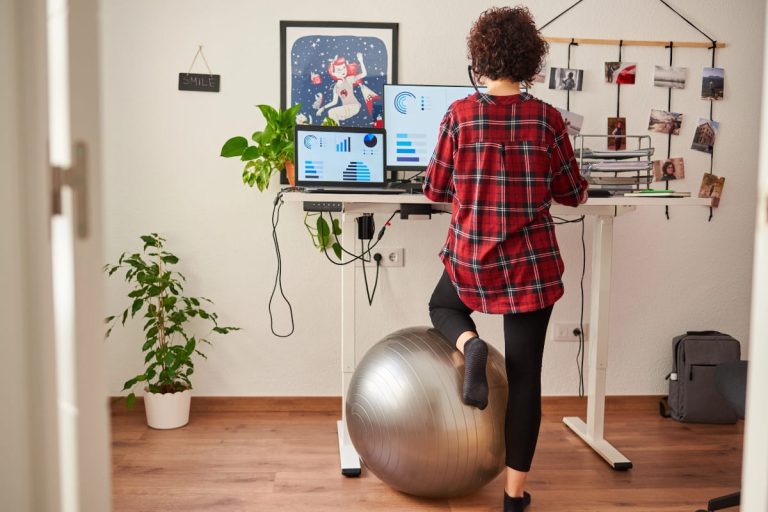
- Active workstations pair task chairs with height-adjustable desks. The trend toward sit-stand working has changed how people think about seating. Your chair needs to support you when you sit, but it shouldn’t discourage you from standing. Lightweight mesh chairs move easily, making transitions between sitting and standing feel natural.

Why investing in a contemporary desk chair pays off
- Good posture reduces strain. Poorly designed seating forces your body into awkward positions, leading to bad posture, shoulder tension, lower back pain, and fatigue. A chair with adjustable lumbar support and proper seat depth keeps your spine aligned, reducing the physical toll of desk work.
- Productivity improves when you’re comfortable. Discomfort distracts you. If you’re constantly shifting to relieve pressure points or stretching to ease stiffness, you’re not focused on your work. A well-designed chair fades into the background, allowing you to focus on what matters.
- Office aesthetics influence how you feel about your workspace. A cluttered, mismatched office feels chaotic. Contemporary furniture with clean lines and cohesive styling creates a sense of order. That matters whether you’re meeting clients in your office or simply starting your workday.
- Durability translates to value. Cheap chairs wear out quickly. Fabric pilling, sagging cushions, and wobbly bases appear within months. Quality components (such as the aluminium frames and commercial-grade gas lifts we use) last for years. Our chairs come with a warranty because we build them to withstand daily use.
- Adaptability extends a chair’s lifespan. As your work changes, your seating needs might shift. Adjustable features let one chair serve multiple roles. The same task chair that works in a traditional office adapts to sit-stand desk setups or collaborative workspaces.
Creating a workspace that supports you
Contemporary ergonomic office chairs represent the intersection of style, ergonomics, and practicality. They’re not flashy or overcomplicated. They do their job well, day after day, without demanding attention.
When choosing a chair, consider how you work. Do you spend long hours at your desk? Mesh backs and adjustable lumbar support matter. Do you lead meetings or present to clients? Executive office chairs with leather upholstery signal professionalism. Are you outfitting a home office in a small space? Compact task chairs with neutral tones blend into residential environments.
Sitting in a chair for a few minutes tells you more than any product description ever could. Visit our O’Connor showroom to test chairs in person. You’ll feel how the tilt mechanism responds, whether the seat depth suits your legs, and if the lumbar support hits the right spot. Our team can guide you through options based on your height, weight, and work habits.
For users needing particular dimensions or features, custom-made chairs provide seating tailored to your body. Shorter users, taller users, or those with unique ergonomic requirements benefit from chairs explicitly designed for them.
Browse our full range of contemporary office chairs online or contact us to discuss your workspace needs. We’re here to help you find seating that works for how you work.
Frequently asked questions
Contemporary chairs integrate ergonomics into minimalist designs. Traditional chairs often separate form and function (bulky padding, heavy frames). Modern seating uses materials like mesh and moulded foam to support your body without visual bulk. Adjustability is standard, not optional.
Absolutely. Models like the Jarvis and Vix suit home offices because they're compact, stylish, and functional. Neutral colours blend into residential spaces, and features like synchro-tilt and seat-slide provide the same ergonomic benefits you'd expect in a corporate office.
Mesh backs need occasional vacuuming to remove dust from the weave. Leather chairs benefit from wiping with a damp cloth and periodic conditioning to prevent drying. Fabric seats can be spot cleaned with a mild detergent. Check gas-lift mechanisms and castors annually to ensure smooth operation. Our chairs are built to require minimal maintenance.
Yes, if they're properly adjusted. Chairs like the Vix and Jarvis include features (adjustable lumbar support, seat slide, tilt tension) designed for extended sitting. The key is setting the chair to fit your body. A poorly adjusted chair, even a high-quality one, won't support you well.
It depends on your priorities. Mesh keeps you cool and promotes airflow, making it ideal for warm Perth summers. Fabric offers a softer feel and comes in more colours. Leather suits formal home offices or dual-purpose spaces where you meet clients. Each material performs well; choose based on your aesthetic and comfort preferences.